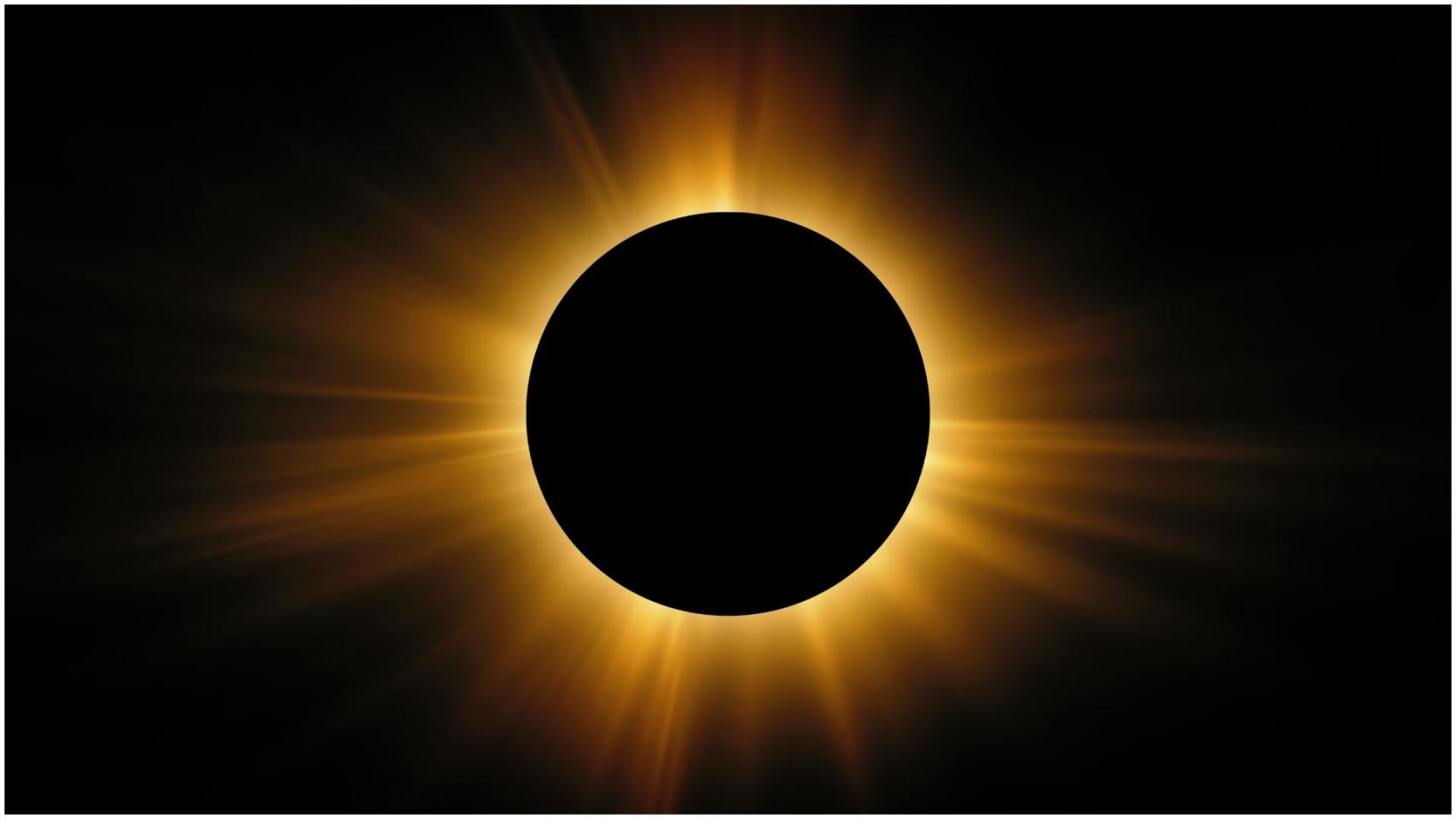
The Blood Moon will not be the only great astronomical phenomenon that can be observed in the United States in the month of March. Just a couple of weeks after the total lunar eclipse, another great celestial show will be enjoyed throughout the American country: a partial solar eclipse.
Although it doesn't have the spectacularity of the Blood Moon, characterized by the impressive reddish tone that envelops the entire Moon, this new phenomenon will offer a unique view thanks to its peculiar "bite."
This is due to the position that the Moon takes between the Earth and the Sun, which, despite not completely covering the solar disk, creates a singular visual effect.
When will the partial solar eclipse be visible in the United States?
The new astronomical phenomenon will take place during the early morning of March 29th. It will begin around 4:50 a.m. (Eastern Time) or 1:50 a.m. (Pacific Time). According to the National Aeronautics and Space Administration (NASA), the eclipse will reach its maximum point around 6:47 a.m. (Eastern Time) or 3:47 a.m. (Pacific Time).
According to the same information, the event will completely end around 8:43 a.m. (Eastern Time) or 5:43 a.m. (Pacific Time).
Where will the partial solar eclipse be visible?
According to what the NASA has shared, this astronomical phenomenon can mainly be seen in the northeast of the United States, in states like New York, Vermont, Maine, Rhode Island, Massachusetts, Connecticut, New Jersey, New Hampshire, Pennsylvania, Delaware, among others.
The eclipse can also be enjoyed in various areas of Canada, Mexico, Central America, and even the northern part of South America.
It's important to mention that, according to the NASA, directly looking at the eclipse is extremely risky due to the harm it can cause to ocular health. Therefore, the agency recommends the use of various instruments to enjoy this spectacle safely:
- Welder's shade number 14
- Special glasses for viewing the sun
- Handheld solar viewers
- Filters for telescopes, binoculars, or cameras
- Mylar plastic sheets coated with aluminum
Another way to view this phenomenon is through the agency's official YouTube channel, called NASA TV, for free.
*This article has been automatically translated using artificial intelligence